Load Store Queue: LSQ
Submodule List
| Submodule | Descrption |
|---|---|
| VirtualLoadQueue | TODO |
| LoadQueueRAR | TODO |
| LoadQueueRAW | TODO |
| LoadQueueReplay | DONE |
| LoadQueueUncache | TODO |
| LoadExceptionBuffer | TODO |
| StoreQueue | DONE |
Functional Description
The LSQ consists of two parts, LoadQueue and StoreQueue, with a wrapper layer for convenient port connections. The primary function of Lsqwrapper is just wiring.
-
LoadQueue
-
LoadQueueRAR: RAR violation check queue
-
LoadQueueRAW: RAW violation check queue
-
LoadQueueUncache: MMIO/Noncacheable load instruction processing queue
-
LoadQueueReplay: Load instruction scheduling replay queue
-
LoadExceptionBuffer: Exception handling queue for Load instructions
-
VirtualLoadQueue: Sequential maintenance queue for Load instructions
-
-
StoreQueue
Feature 1: Update LqPtr for Load instructions and SqPtr for Store instructions
- Due to timing considerations, the allocation of LqPtr and SqPtr is split into two parts, as shown in the figure

-
Dispatch stage
- Count the number of LoadFlow or StoreFlow for each instruction and calculate the LqPtr or SqPtr in a cumulative manner
-
LSQ enqueue phase
- Accurately calculate LqPtr or SqPtr by accumulating based on the enqPtr maintained by LoadQueue or StoreQueue
-
LsqEnqCtrl update logic
-
If a pipeline flush occurs, update based on the number of flushed Load or Store instructions and the commit count
-
If no pipeline flush occurs but there is an allocation request, update based on the enqueue and commit counts
-
Otherwise, update based on the commit count
-
Overall Block Diagram

\newpage
Interface timing
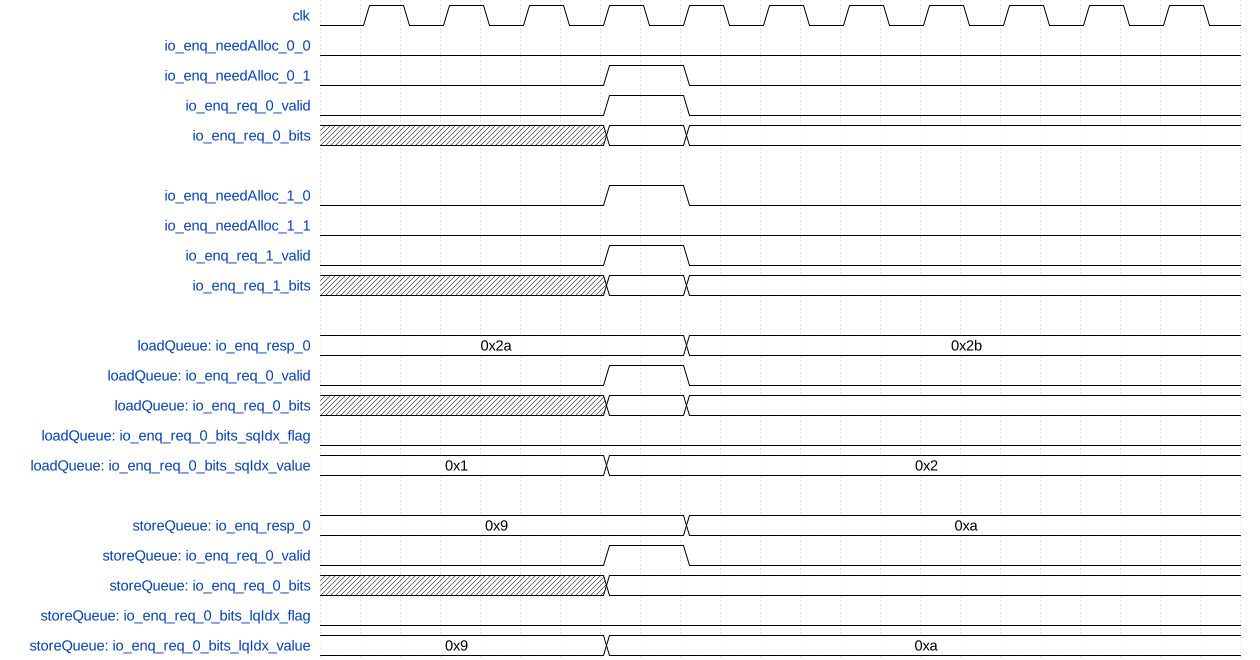
Timing example of Load and Store instruction enqueue interface